
When someone calls us asking about a specific make by name, it’s usually the Toyota Sienna. There’s a reason for that: it’s been one of the most converted minivans in the accessible vehicle market for years, and its reputation for reliability carries real weight with buyers who are making a serious purchase. But a lot has changed since the 2021 redesign, and what people think they know about the Sienna isn’t always current. Here’s what we see from the lot, and what actually matters for Florida buyers.
Key Takeaways
- Every Toyota Sienna built from 2021 onward is a hybrid. Toyota rates the unconverted Sienna at 36 mpg combined, and that advantage carries through in converted vehicles for Florida buyers logging regular miles to medical appointments or specialists across the state.
- According to BraunAbility’s published specifications, the in-floor Sienna conversion offers a 54-inch door opening height and a 1,000 lb ramp capacity, making it one of the most capable platforms for larger power chairs.
- Side-entry is the most common configuration. Rear-entry is available on the Sienna and works well for passengers who need standard parking-space clearance on the driver’s side.
- Florida heat puts sustained pressure on the electrical systems that power ramps, kneeling mechanisms, and automatic doors. We check every one of these systems before a van reaches our lot.
- Sienna conversions are among the most complex and expensive in the minivan segment. Understanding what goes into the conversion helps you evaluate any van you’re looking at.
What Makes the Sienna Work Well as a Wheelchair Van
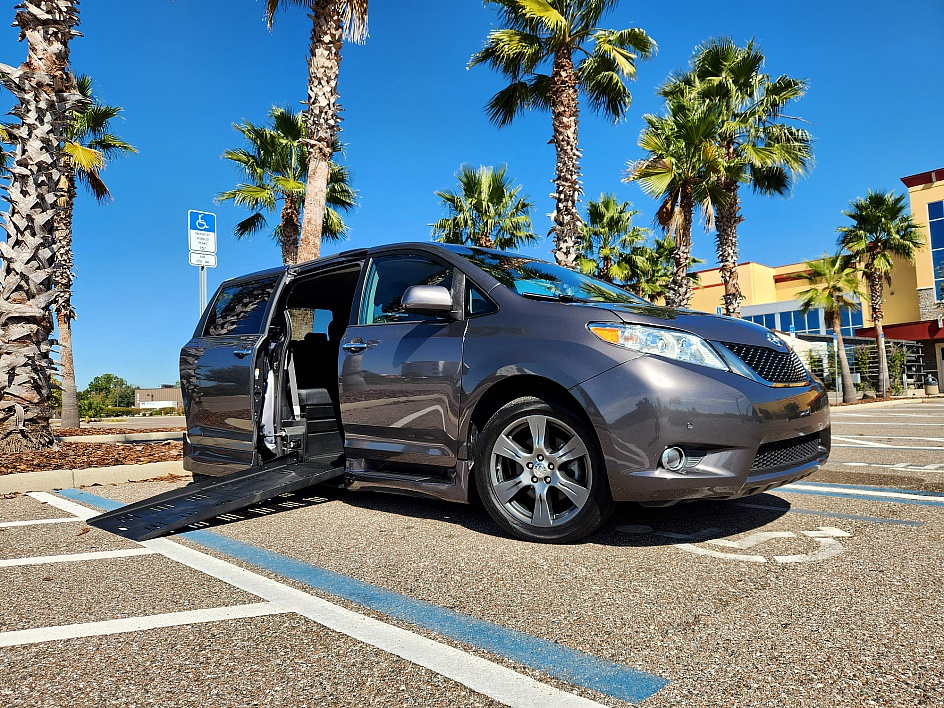
Toyota Sienna wheelchair van sold by Mobility Florida
The Sienna has earned its reputation as a conversion-friendly vehicle. The interior is wide and the roof height gives conversions room to work with. According to BraunAbility’s published specifications, the in-floor Sienna conversion offers a 54-inch door opening height, with the fold-out configuration reaching 56 inches. The in-floor ramp is the more common setup on newer vans. For a wheelchair user who sits tall, that clearance difference between the Sienna and other platforms is noticed on every trip.
BraunAbility’s Sienna spec sheet lists the in-floor ramp at 30.3 inches wide with a 1,000 lb load capacity. The ramp stows completely beneath the floor when not in use, keeping the interior open for passengers and cargo. It pairs with a kneeling system that lowers the vehicle on the ramp side, reducing the entry angle. The result is a van that tends to feel well-integrated rather than retrofitted.
Key specs (per BraunAbility Toyota Sienna conversion specifications):
- Door opening height: 54 inches (in-floor), 56 inches (fold-out)
- Interior cabin height: 54 inches after conversion
- In-floor ramp width: 30.3 inches, accommodating most power wheelchairs
- Ramp load capacity: 1,000 lbs
- Kneeling system: standard on most conversions, reduces ramp angle for easier entry and exit
Pro Tip: In-Floor vs. Fold-Out Ramp
The in-floor ramp is the standard on most professionally converted Siennas. It stows flush beneath the floor when not in use, keeping the interior fully open. The fold-out configuration offers slightly more door opening height but is less common on newer models. When evaluating any Sienna, confirm which ramp type it has and ask to see it deployed and stowed before you commit.
The 2021 Hybrid Change: What It Means in Practice
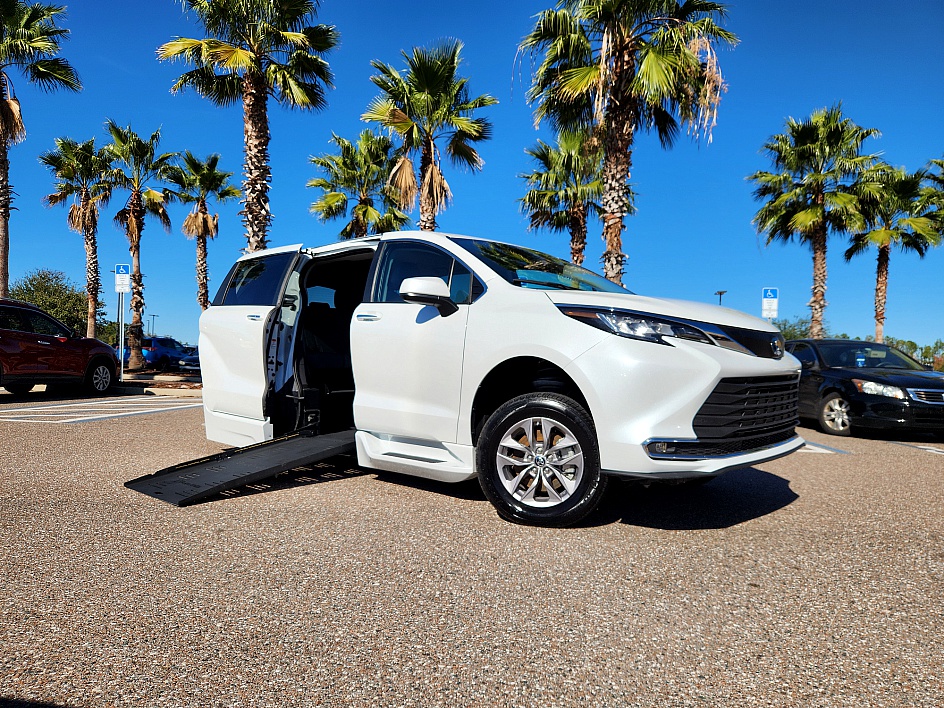
Hybrid Toyota Sienna Handicap Van
Starting with the 2021 model year, Toyota moved the Sienna to a hybrid-only drivetrain. There is no non-hybrid option anymore. This change made the Sienna conversion significantly more complex and expensive than it was before. Converting a 2021+ Sienna requires relocating the high-voltage battery pack and rerouting high-voltage cables, work that doesn’t exist on gas-only platforms. As a result, Sienna conversions run 20 to 30 percent more than comparable Pacifica or Odyssey conversions.
That complexity isn’t a reason to avoid the Sienna, but it does raise the bar for who should be doing the conversion. Only established conversion companies with specific experience on the hybrid platform should be touching these vehicles. A conversion done incorrectly can leave error codes in the hybrid system that surface after purchase. We check the electrical integration on every 2021+ hybrid we evaluate at auction. If there are integration issues, the van doesn’t come back to the lot.
Toyota’s EPA-rated fuel economy for the unconverted Sienna hybrid is 36 mpg combined. Converted vehicles add weight, so real-world economy runs slightly lower, but the hybrid advantage over gas-only minivans in the same segment remains substantial. Toyota also backs the Sienna hybrid battery with a 10-year/150,000-mile warranty as of the 2021 model year, per Toyota’s published warranty documentation. That applies to the original hybrid system, not to the aftermarket conversion components, which operate outside Toyota’s factory coverage.
The Sienna is Well-Suited to Florida Driving
Florida places specific demands on any vehicle, and a wheelchair van is no exception. Buyers across the state deal with daily medical appointments, long drives to specialists in other counties, intense afternoon thunderstorms, and year-round heat and humidity that are harder on vehicles than most people account for when they’re shopping.
Heat and Electrical Systems
Florida heat puts sustained pressure on batteries and electrical systems. Wheelchair vans depend on those systems for power ramps, automatic sliding doors, kneeling mechanisms, and securement controls. A battery that performs adequately in mild conditions can struggle under the sustained demand Florida summers put on it.
The Sienna’s hybrid system has an advantage here. The 12-volt auxiliary battery that powers the conversion’s electrical components is managed and maintained by the hybrid system rather than running independently. Toyota’s extended hybrid battery warranty reflects confidence in the system’s durability. That said, buyers should still ask about the age and condition of the conversion’s electrical components, especially since these are aftermarket additions that fall outside Toyota’s factory warranty.
Rain and Ramp Safety
Afternoon thunderstorms are a routine part of Florida life, and they happen on days when appointments and errands still need to get done. Before committing to any wheelchair van, the ramp surface should be physically tested for grip in wet conditions. A ramp that performs well in dry conditions but becomes slippery in rain is a safety issue worth identifying before purchase, not after.
Pro Tip: Test the Ramp Wet
When looking at any wheelchair van in Florida, bring a spray bottle and test the ramp surface grip before you leave. It takes thirty seconds and reveals something no dry-weather walkthrough will show you. We test all our ramps as part of our intake process, but it’s a good habit regardless of where you’re buying.
Long-Distance Comfort
Many Florida buyers aren’t just making local trips. Families in The Villages driving to Gainesville or Orlando, West Palm Beach buyers heading to specialists in Miami, buyers across the Panhandle putting serious highway miles on a van, all of them are logging distances where ride quality and fuel costs add up. The Sienna’s ride is smooth and composed over highway miles, and the hybrid’s fuel economy advantage becomes more meaningful the more ground you cover. One buyer who drove the van over 1,200 miles home after purchase reported it “was comfortable and ran great” with no trouble over the distance. Hal Carey, verified buyer, October 2024.
Side-Entry vs. Rear-Entry on the Sienna
The configuration question is the first one we work through before we talk about anything else. Here is how the two options differ on the Sienna.
Side-Entry
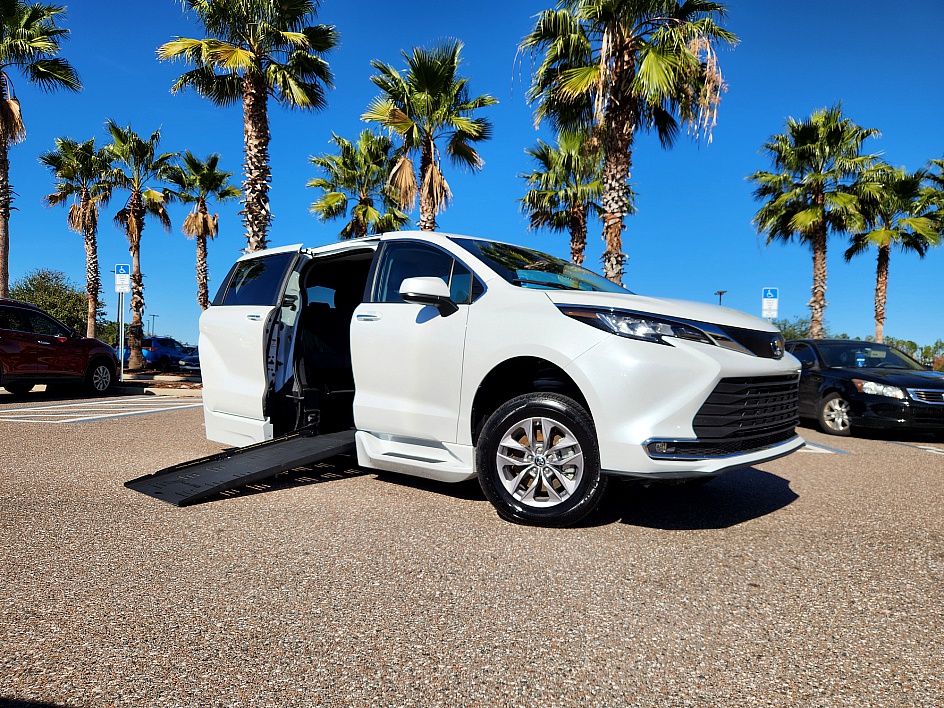
Side-entry Toyota Sienna Wheelchair Van sold by Mobility Florida
Side-entry is the most common configuration and works for both drivers and passengers. The ramp deploys from the passenger-side sliding door. If the wheelchair user drives, side-entry gives them access to the front seating area after rolling in. If they ride as a passenger, they position in the middle section and lock down there.
The practical consideration is side clearance. Side-entry requires enough room on the passenger side to fully deploy the ramp. Standard parking spaces are often tight for this. Accessible parking spaces solve it, and a residential driveway almost always works fine, but it is worth thinking through your primary parking situation before committing to this configuration. Before deciding, check the side-entry van dimensions guide to confirm the ramp width and door opening on any Sienna you’re considering will accommodate your wheelchair or scooter.
Rear-Entry
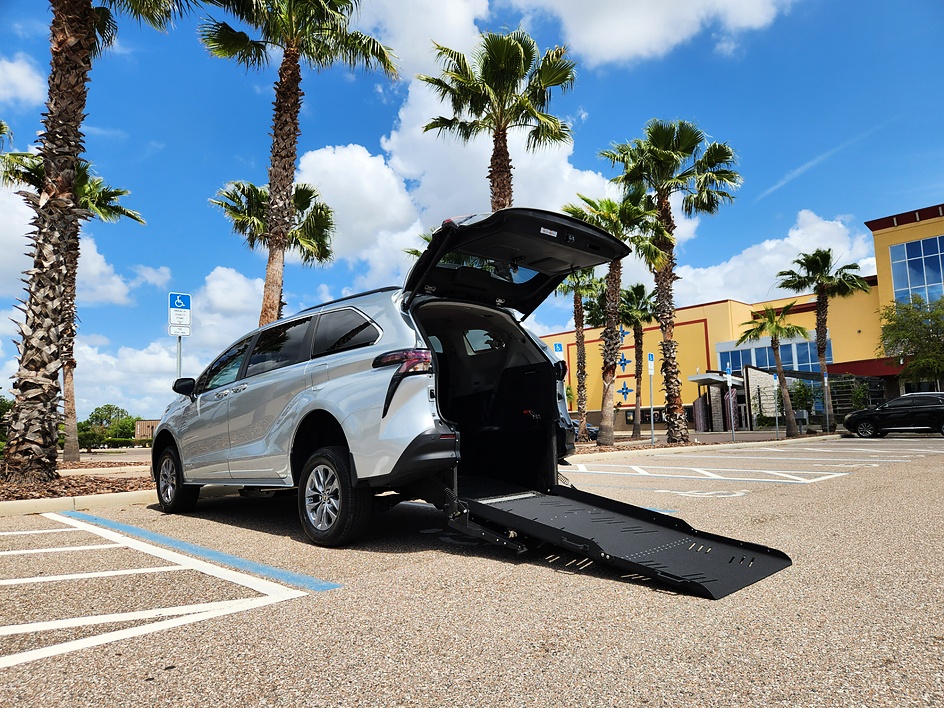
Rear-entry Toyota Sienna Wheelchair Van sold by Mobility Florida
Rear-entry vans load from the back hatch. You need depth behind the vehicle rather than side clearance, so standard parking spaces work without issue. The tradeoff is that rear-entry vans are almost always configured for passengers, not drivers. The wheelchair user rides in the back, secured to the floor, with ambulatory passengers in front.
On the Sienna specifically, full-cut rear-entry conversions are performed by VMI and are among the more expensive configurations available. For families managing a member who uses a wheelchair and rides as a passenger, rear-entry is often the simpler day-to-day setup. Not sure which fits your situation? Our side-entry vs. rear-entry guide walks through the decision in more detail.
What to Look for When Buying a Sienna Wheelchair Van
Whether you’re buying from us or anywhere else, here’s what to check on any converted Sienna before you commit.
- Is the floor actually lowered? Not every converted Sienna has a lowered floor. A non-lowered floor means less headroom and a steeper ramp angle. Ask directly and look for a smooth, flush transition from the ramp into the interior.
- Inspect the floor from underneath. The lowered floor section was cut and rebuilt. When done poorly or exposed to water, it can soften or rust underneath. Florida humidity is not forgiving here. Put the van on a lift and look at the underside. If the seller won’t do that, walk away.
- Run the ramp through its full cycle more than once. Deploy and stow the ramp several times. Listen for hesitation, grinding, or inconsistent movement. Check that it locks flat when stowed and deploys to the same position every time.
- Test the kneeling system separately. The kneeling system lowers the van on the ramp side and operates independently from the ramp. Activate it, let it drop fully, then bring it back up. In Florida heat, components that are marginal in mild weather fail faster. If it moves slowly or doesn’t return to the same ride height consistently, have it inspected before you buy.
- Check the tie-down tracks. Tracks run along the floor and secure the wheelchair during transit. On heavily used vans they can bend or strip. Check that the anchors engage cleanly and that the tracks are flush with the floor along their full length.
- On 2021+ hybrids, check for dashboard warnings. A conversion that cut corners on the hybrid integration can leave error codes that surface after purchase. Ask whether any warning lights have been present and confirm the conversion was done by an established company with experience on the hybrid platform.
Considering a Toyota Sienna for Your Wheelchair Van?
Browse our inventory or give us a call at (813) 212-9612 and we’ll tell you what we have.
Toyota Sienna vs. Other Wheelchair Van Options
Sienna vs. Honda Odyssey
The Honda Odyssey is a smooth, refined ride with a strong track record in the conversion market. The Sienna’s primary advantage is headroom and fuel economy. The conversion complexity and cost are higher on the Sienna, which is worth factoring in when comparing used prices.
Sienna vs. Chrysler Pacifica
The Pacifica has a long track record of conversions, wide used inventory availability, and lower conversion costs than the Sienna. It’s a strong platform. The Sienna has the headroom and fuel economy edge. If a buyer comes in without a make preference, we walk through the specifics of who’s using the van and how before pointing toward either one.
Sienna vs. Dodge Grand Caravan
The Dodge Grand Caravan was discontinued in 2020, but used inventory remains available at the most accessible price points in the segment. The Sienna is a significantly newer platform with better fuel efficiency. For buyers with budget flexibility, the Sienna is the stronger long-term vehicle.
Key Terms Explained
Lowered-floor conversion: A modification in which the factory floor of the minivan is cut and rebuilt lower behind the sliding door, typically by 10 to 14 inches. This creates more interior headroom and a gentler ramp angle for wheelchair access.
In-floor ramp: A ramp that stows flush beneath the van floor when not in use, leaving the interior fully open. When deployed, it extends from the door opening to the ground.
Kneeling system: A suspension modification that lowers the van on the ramp side when the ramp is deployed, reducing the angle from the ground to the interior and making entry and exit easier for wheelchair users.
Rebuilt title: A vehicle title designation in Florida indicating the vehicle was previously declared a total loss by an insurance company, was subsequently repaired, and passed a physical inspection by the Florida DHSMV under Florida Statute 319.14 before being titled and registered for road use. A rebuilt title is not a salvage title. Salvage means the vehicle is unrepaired and cannot be legally registered or driven on public roads.
The Bottom Line on the Toyota Sienna Wheelchair Van
- Best for: taller wheelchair users, buyers prioritizing fuel economy, and anyone covering regular long distances across Florida.
- Sienna conversions cost 20 to 30 percent more than comparable Pacifica or Odyssey conversions. Factor that into any used price comparison.
- Rear-entry on the Sienna is VMI-only and higher cost. Side-entry is the practical choice for most buyers. Use the side-entry dimensions guide to confirm the ramp and door opening will fit your specific wheelchair or scooter.
- The 2021+ hybrid drivetrain is reliable but raises the bar for who should be doing the conversion. A poorly integrated conversion causes problems that show up after purchase.
- If budget is the priority, the Pacifica or Grand Caravan will get you further. If headroom and long-term reliability matter most, the Sienna is worth the premium.
Frequently Asked Questions
What years of Toyota Sienna can be converted to a wheelchair van?
Any model year. Pre-2021 Siennas used a conventional gas drivetrain and are widely available as used converted vans. From 2021 onward, the Sienna moved to a hybrid-only drivetrain, which requires a more involved conversion process. The 2021 redesign also changed the floor geometry, so pre-2021 and post-2021 conversions are not equivalent. Confirm the specific configuration and specs on any van you’re considering rather than assuming consistency across years.
What is the weight limit for a Toyota Sienna wheelchair van ramp?
1,000 lbs, according to BraunAbility’s published specifications for their Toyota Sienna conversions. This accommodates most power wheelchairs and mobility scooters with the user. Other conversion manufacturers may publish different figures, so confirming the ramp spec on the specific van is worth doing before purchase.
How much does a Toyota Sienna wheelchair van cost in Florida?
New converted Siennas run $80,000 to $105,000, depending on trim and conversion. Used rebuilt title Siennas are typically in the $40,000 to $65,000 range. The gap reflects both vehicle age and title history. Rebuilt title vehicles sell at a discount to clean title equivalents because the market prices on history rather than current condition.
How long do Toyota Sienna wheelchair van conversions last?
The Sienna platform is built for longevity, and Toyota’s hybrid system is designed for the life of the vehicle with proper maintenance. Conversion components, including the ramp mechanism, kneeling system, and securement hardware, have their own wear profiles and are the most service-intensive parts of the vehicle. How long a conversion holds up depends on installation quality, usage frequency, and maintenance history. A van used for personal transportation and properly maintained will typically be in significantly better condition than one used for commercial transport.
Do you deliver Toyota Sienna wheelchair vans across Florida?
Yes, and beyond Florida. We deliver across the continental US and to Puerto Rico. The remote buyer process involves a live video walkthrough of the specific van, a deposit to hold it, and delivery or pickup arrangements once payment is complete. Most buyers purchase without visiting the lot.