
Quick answer: A power ramp deploys automatically at the touch of a button and allows a wheelchair user to load independently. A manual ramp is operated by hand and requires someone present to deploy and stow it. If the wheelchair user is ever alone, choose power. If a caregiver is always there, manual is a workable option. Everything else is detail.
Most people ask the wrong question when they start shopping for a wheelchair van. They ask “which ramp is better?” when the question that actually matters is “which ramp fits how this van is going to be used every single day?”
We go through this with buyers constantly. Someone calls and says they want a power ramp because they’ve heard it’s easier. We ask a few questions and find out their mother is a passenger, there’s always someone with her, and they’re watching their budget carefully. For them, a manual ramp is often the better answer. The reverse is just as common.
Here’s how we think through it.
Key Takeaways
- Power ramps deploy at the touch of a button and are the right choice when the wheelchair user drives independently or loads without a caregiver present.
- Manual ramps are operated by hand and work well when a caregiver is always available to deploy and stow the ramp.
- Power ramps typically include a kneeling system that lowers the van’s rear suspension as the ramp deploys, reducing the ramp angle and making entry and exit easier.
- In-floor and fold-out are storage styles, not separate ramp categories. Both can be power or manual.
- The one question that settles this faster than any other: who is going to operate the ramp, and will they always be there?
How a Power Ramp Works
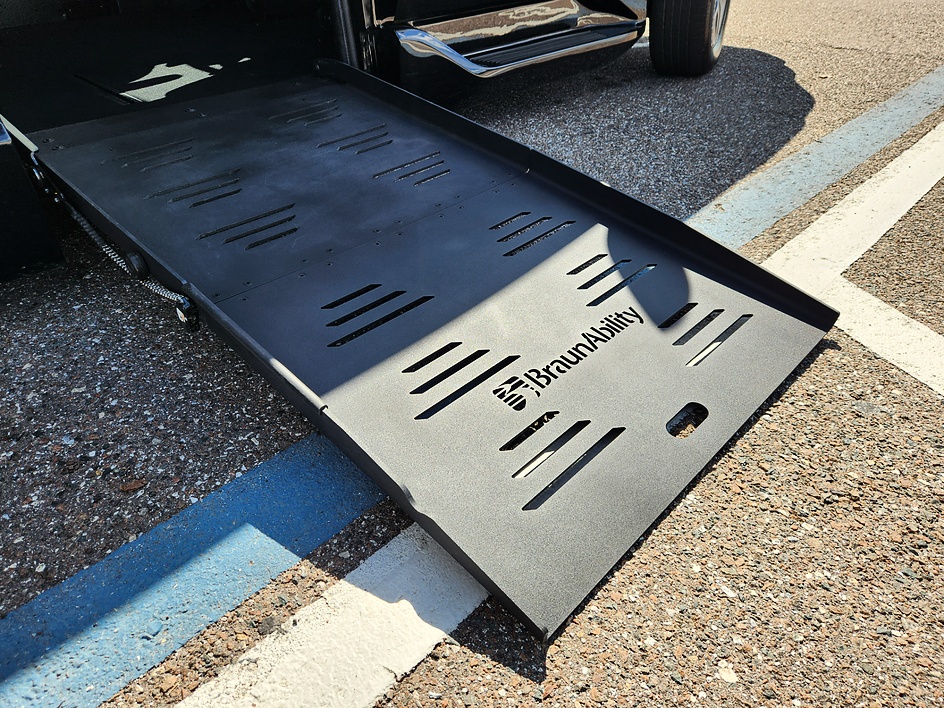 A power ramp is motorized. It deploys automatically when you press a button, either on a key fob, on the van’s interior panel, or through a remote control mounted near the door. The sliding door opens first, and the ramp extends or unfolds on its own.
Most vans with a power ramp also include a kneeling system. Using a linear actuator, the kneeling system lowers the passenger-side rear suspension while the ramp deploys, which reduces the ramp angle and makes it easier to roll on and off. On a BraunAbility Pacifica, for example, this reduces the ramp angle to approximately 9.9 degrees. That matters significantly for manual wheelchair users with limited arm strength, and for power chairs that can struggle on steeper inclines.
What is a kneeling system? A kneeling system is an electric actuator that lowers the rear suspension of a wheelchair van on the ramp side during boarding, reducing the ramp’s incline angle so the wheelchair user can enter and exit with less effort.
The main advantage of a power ramp is independence. A wheelchair user who drives themselves can pull up, press a button, roll out, and deploy the ramp without any help. For someone who lives alone or travels independently, that capability is not optional. It’s essential.
Power ramps draw on the vehicle’s electrical system, so the battery and conversion wiring are more critical than on a manual van. They also have more moving parts, which means more to maintain and more that can potentially fail.
Who should choose a power ramp
A power ramp is the right choice if the wheelchair user drives independently, travels alone at any point, or cannot reliably count on someone being present to operate a ramp at every loading and unloading. If independence matters even some of the time, a power ramp is the answer.
Pro Tip
When evaluating a used van with a power ramp, ask specifically about the ramp motor condition and the last time the conversion was serviced. The ramp is the component most likely to show wear on a high-mileage van. A sluggish or hesitant deploy is a warning sign, not a quirk to overlook.
How a Manual Ramp Works
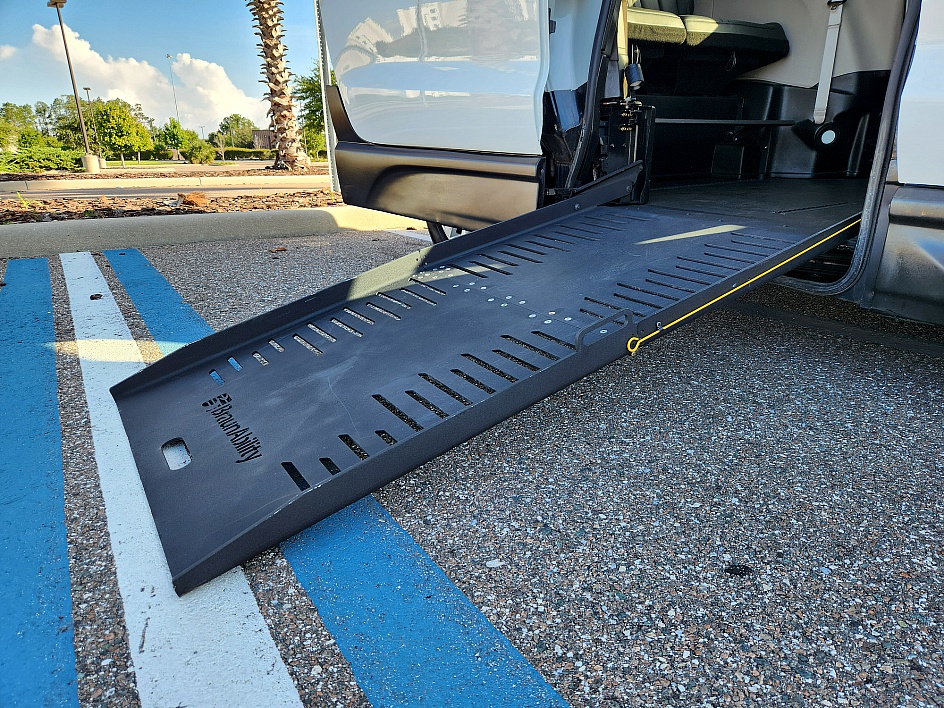 A manual ramp does the same job with no electronics involved. Someone pulls it out by hand, the wheelchair user loads, and the ramp gets stowed back in place. That’s it.
The physical operation varies depending on the ramp style. A fold-out manual ramp unfolds from the doorframe and locks into position. A manual in-floor ramp uses a handle that you pull to slide the ramp up from its floor storage. Neither requires significant strength, and most caregivers adapt to the motion quickly.
What a manual ramp does not do is let the wheelchair user load themselves independently, at least not easily. If someone is traveling alone and using a manual van, stowing the ramp once they’re inside is awkward at best and impossible without assistance at worst. This is the single biggest limitation of a manual ramp setup.
The upside is simplicity. No motor, no wiring, no chain mechanism to maintain or fail. Manual ramps have fewer parts and a strong reliability record over the long run. They also tend to be found on vans priced a bit lower, since the conversion is less complex.
Who should choose a manual ramp
A manual ramp works well when a caregiver, spouse, or family member is present every single time the van is used. If the wheelchair user is always transported and there is always someone available to deploy and stow the ramp, a manual setup is a practical and cost-effective choice.
“I loved the van we got at mobility. My husband was a double amputee and he was finally able to go places. The ramp worked great and plenty of room to move his wheelchair around inside the van. Never had any problems with the vehicle. Mobility is honest and works with you.”
Gail Smith, verified buyer | November 2023
Read real reviews from real customers
The One Question We Always Ask First
Before we talk about any specific van, we ask this: who is going to operate the ramp, and will they always be there?
If the answer is that the wheelchair user drives themselves, or that they’re often alone or with people who can’t operate a ramp, the answer is a power ramp. Full stop. Independence requires it.
If the answer is that there’s always a caregiver, spouse, or family member present when the van is used, a manual ramp is a legitimate option. Many buyers are transporting a parent or spouse who stays in the wheelchair for the ride. In that situation, the caregiver is always there, always deploying the ramp, and a manual setup works just fine and costs less.
A third scenario worth knowing: some wheelchair users transfer to the driver’s seat and then the wheelchair gets stowed. In that case, ramp operation falls to whoever is helping with the chair. Same logic applies: if there’s always a helper, manual is workable.
| Feature | Power Ramp | Manual Ramp |
|---|---|---|
| Deploy method | Button or key fob, automatic | By hand |
| Who operates it | Wheelchair user independently or caregiver | Caregiver required for practical use |
| Kneeling system | Usually included, reduces ramp slope | Typically not included |
| Maintenance | Every 6 months or 5,000 miles per BraunAbility guidelines | Minimal; no motorized components |
| Battery dependency | Yes; manual override available on many vans if system fails | No; works regardless of battery status |
| Best for | Independent drivers, frequent solo use | Passenger transport with a caregiver always present |
Not Sure Which Ramp Setup Fits Your Situation?
Call us and describe who the van is for. We’ll tell you honestly what we’d recommend before you start looking at inventory.
A Note on In-Floor vs. Fold-Out Ramps
Buyers sometimes treat in-floor and fold-out as a third decision on top of power vs. manual. They’re actually separate. Both are storage configurations, and both can be power or manual.
An in-floor ramp stores completely below the floor of the van when stowed. You don’t see it. The interior stays open and unobstructed from both sides of the sliding door. This matters if you have other passengers who need to access the rear seating area, or if the wheelchair is large and needs all available interior clearance to maneuver.
A fold-out ramp stores upright alongside the interior of the sliding door. When stowed, it sits vertically below the window line. It takes up a small amount of interior space near the door and, on some vans, can limit how far the front passenger seat reclines. Fold-out ramps do present a slightly lower ramp angle than in-floor ramps, which can matter for manual wheelchair users.
The practical difference comes down to interior clearance and how you use the van day to day. Our side-entry vs. rear-entry guide covers van configuration in more detail if you’re working through the bigger layout question.
Pro Tip
In-floor ramps tend to collect more debris in the floor channel than fold-out ramps and may need more frequent cleaning to keep the deploy mechanism running smoothly. If a van has an in-floor ramp, look at the channel when you inspect it. Dirt and grit in there is normal, but heavy buildup that’s been sitting for a long time is a maintenance flag.
What to Check on a Used Van
The ramp is the component most likely to show wear on any used wheelchair van, power or manual. We look at it carefully on every van we bring in, and you should too.
For a power ramp, watch the full deploy and retract cycle. It should move smoothly and at a consistent speed from start to finish. Any hesitation, grinding noise, or change in speed during the cycle means the motor or chain mechanism needs attention. Also check that the safety sensors are working. Most power ramps have sensors that stop the ramp if something is in the way; they should respond to a hand placed in the path.
For a manual ramp, check the folding mechanism if it’s a fold-out style, or the pull handle and floor channel on an in-floor ramp. The ramp should lock into the deployed position firmly with no wobble. The surface should be free of significant bends or damage that could catch a wheel.
On both types, look at the threshold where the ramp meets the van floor. That transition point takes wear from every wheelchair that rolls over it. Worn or damaged thresholds are a common issue on higher-mileage vans.
Pro Tip
Ask for a full demo before you commit to anything. Watch the ramp deploy and retract completely, roll a wheelchair up and back down, and pay attention to how the transition from ramp to van floor feels. What seems smooth when you’re rested and looking for a van may feel very different at the end of a long day. Try it more than once.
The Bottom Line on Power vs. Manual Ramps
- Choose a power ramp if the wheelchair user drives independently, travels alone, or can’t rely on someone being present at every loading.
- Choose a manual ramp if a caregiver, spouse, or family member is always there to deploy and stow the ramp.
- Don’t overlook the kneeling system. Power ramp vans typically lower toward the curb on deploy, reducing the ramp angle meaningfully. Manual vans usually don’t have this.
- In-floor vs. fold-out is a separate question. Decide power vs. manual first, then figure out which storage style fits the van and the wheelchair.
- On a used van, always watch the full ramp cycle before you commit. One demo tells you more than any description.
- Get the people question right first. Who is this van for, and how will they use it day to day? The ramp question answers itself once you know that.
Common Questions
Can a manual ramp be converted to power later?
It’s technically possible but rarely a practical path on a used van. Adding a power ramp to a van not originally built with one involves retrofitting a motor, wiring it into the vehicle’s electrical system, and in many cases modifying the ramp mechanism itself. Conversion costs vary significantly by van make and conversion brand, but the work involved is substantial enough that starting with a power van is almost always the more sensible approach if you know that’s what you need.
What’s the actual cost difference between power and manual vans?
On new conversions, the gap between a power and manual ramp package is meaningful. A new fully converted wheelchair van can range from $65,000 to $98,000 depending on chassis, brand, and conversion type, with power ramp configurations sitting at the higher end of that range. On used inventory, mileage, year, make, and overall condition are the dominant pricing factors and the gap between power and manual narrows considerably. Two otherwise comparable used vans may be close in price regardless of ramp type. The short answer is: power costs more new, less so used, and the spread varies enough that a conversation about your specific situation is more useful than a single number.
How much maintenance does a power ramp actually need?
According to BraunAbility’s published service guidelines, power ramp systems should be serviced every six months or every 5,000 miles, whichever comes first, by a certified mobility technician. A standard service covers ramp operation, the kneeling system, door alignment, lubrication of hinge and pivot points, and verification of the electronic control systems. Keeping up with this schedule prevents most of the issues that cause power ramps to fail unexpectedly. A well-maintained power ramp on a used van should not be a concern. A neglected one is a different story.
What happens if a power ramp stops working when you’re away from home?
Many wheelchair-accessible vans include a manual override system that allows the ramp to be operated by hand if the primary electrical system fails. However, this varies by conversion brand and model year, and not every van has one. Before you take delivery of any van, ask your seller specifically whether a manual override exists, where it’s located, and how it works. As BraunAbility notes, a certified mobility technician can walk you through manual operations in advance so you’re prepared before you need it. If you are an independent driver, this is not a detail to leave until something goes wrong.
Does using a power ramp wear down the vehicle battery faster?
In our experience, the additional electrical load from the ramp and conversion system does put more demand on the battery than a standard vehicle, and batteries on accessible vans may need replacement sooner as a result. Standard vehicle batteries typically last three to five years; plan to monitor yours and factor in the additional conversion load when assessing battery condition on a used van. Ask when the battery was last replaced before you buy.
Does ramp type affect what insurance will cover?
Ramp type on its own is not a standard insurance rating factor. Whether you have a power ramp or a manual ramp does not typically change what coverage is available or what you pay. What does affect insurance on a used wheelchair van is the title status. Rebuilt title vans can be insured by most major carriers, and the premium difference is often smaller than buyers expect. A quick call to your insurer before you buy is always worth it. Our rebuilt title explainer covers the full insurance picture if you want to read through it before you call.